.png)


How Flat Feet Can Affect Knee and Back Health – Orthopaedic Doctor in Bangalore

Flat feet are a pretty common issue where the arches under your feet are lower than normal, or basically, the arch is collapsed. Many people don’t feel much at first, but over time, flat feet can mess with posture, walking style, balance, and how your joints line up. In some cases, it slowly turns into knee pain, back discomfort, muscle strain, and overall reduced mobility, kind of like everything starts compensating.
Getting early help from an experienced orthopaedic doctor in Bangalore can make a big difference because it helps spot movement-related problems before they turn into long-term joint complications. Dr. Amith Shetty at Kneev Orthopaedic Center often sees patients whoseposture and alignment problems are linked to flat feet and day-to-day walking mechanics.
What Are Flat Feet?
Flat feet happen when the arches inside the feet do not develop correctly or they collapse little by little with time. When you stand, the entire sole touches the ground instead of only the appropriate areas.
Flat feet may develop due to:
Genetics
Weak foot muscles
Ligament laxity
Injury
Obesity
Age-related changes
Poor footwear support
Some people can have flat feet and still feel fine, while others notice pain and posture-related troubles in daily life.
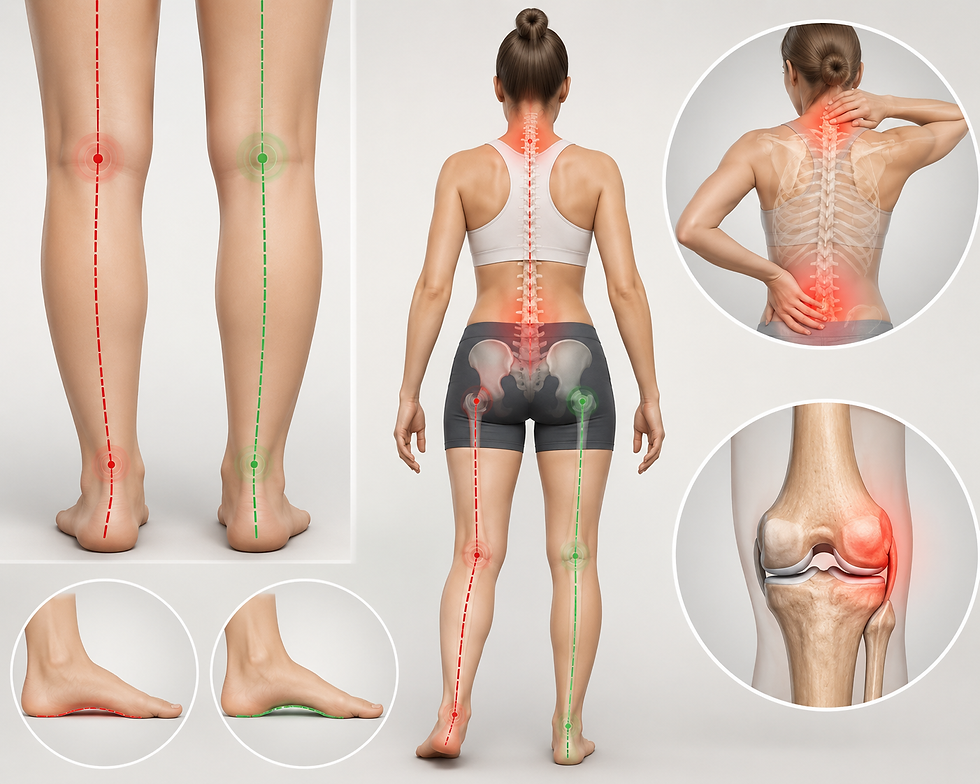
How Flat Feet Affect Body Alignment
Your feet are kind of the “base layer” for posture and how you move. If foot alignment is off, it can affect ankles, knees, hips and even the spine
Flat feet may cause:
Improper weight distribution
Increased knee stress
Changes in walking pattern
Muscle imbalance
Poor posture
Reduced shock absorption
Over time, these effects can add up and lead to joint pain, stiffness, and discomfort during everyday activities
How Flat Feet Affect Knee Health
Often, flat feet allow the foot to roll inward while walking. That shift changes knee alignment and tends to increase stress inside the knee joint.
This may show up as:
Knee pain while walking
Patellar tracking problems
Higher cartilage stress
Joint stiffness
Difficulty during physical activity
A skilled orthopaedic doctor in Bangalore can check whether your foot posture is influencing knee function and the way your leg moves.
How Flat Feet Affect Back Health
Bad foot alignment can also impact your spine and lower back. When your body compensates for an awkward foot position, surrounding muscles and joints may end up working harder than they should, and that extra effort can irritate tissues over time.
Possible signs include:
Lower back pain
Hip discomfort
Muscle fatigue
Poor posture
Trouble standing for long periods
If these symptoms are ignored, long-term mobility and comfort might eventually get affected
Common Symptoms Associated with Flat Feet

People with flat feet may notice:
Usually, these symptoms become more obvious during activity or after being on your feet for a long time.
Importance of Early Orthopaedic Evaluation
Early diagnosis matters because it helps identify posture and alignment issues before they get worse.
Orthopaedic evaluation may involve:
Foot posture assessment
Gait analysis
Joint examination
Imaging studies, if required
With timely care from an orthopaedic doctor in Bangalore, posture and movement efficiency can improve, and joint health can be supported better.
Treatment Options for Flat Feet
Treatment depends on how severe the symptoms are, and how the overall alignment looks.
1. Supportive Footwear
Using the right shoes can improve stability and reduce extra pressure on joints.
2. Orthotic Support
Custom insoles may help correct foot alignment and improve walking mechanics.
3. Physiotherapy
Strengthening and stretching exercises can support muscles and help posture and stability.
4. Weight Management
If weight is a factor, reducing excess weight decreases the load on joints.
5. Activity Modification
Avoiding unnecessary overstrain can reduce discomfort.
Dr Amith Shetty usually suggests a customised rehabilitation program for people who have posture-related orthopaedic problems, so the plan fits your pattern and symptoms.
Tips to Protect Knee and Back Health

Maintain Healthy Body Weight
Extra body weight increases pressure on joints.
Wear Supportive Shoes
Pick footwear with proper arch support and enough stability.
Strengthen Leg and Core Muscles
Stronger muscles help with posture and add joint stability.
Avoid Standing for Long Hours
Prolonged standing can make symptoms worse.
When Should You Consult Dr. Amith Shetty?
You should consider consulting Dr. Amith Shetty if you have:
Persistent knee pain
Lower back discomfort
Foot pain during walking
Poor posture
Difficulty standing for long periods
Reduced mobility
Early orthopaedic care can help improve alignment, ease pain, and reduce the chances of future complications.
Conclusion
Flat feet can gradually affect knee alignment, posture, and spinal health if left untreated. With proper diagnosis, supportive care, physiotherapy, and lifestyle changes, movement can feel smoother, and joint stress may decrease significantly.
If you are dealing with knee pain, back discomfort, or posture-related issues, consulting Dr. Amith Shetty, an experienced orthopaedic doctor in Bangalore, can help you get personalised treatment and long-term orthopaedic support for better mobility and overall joint health.


Comments